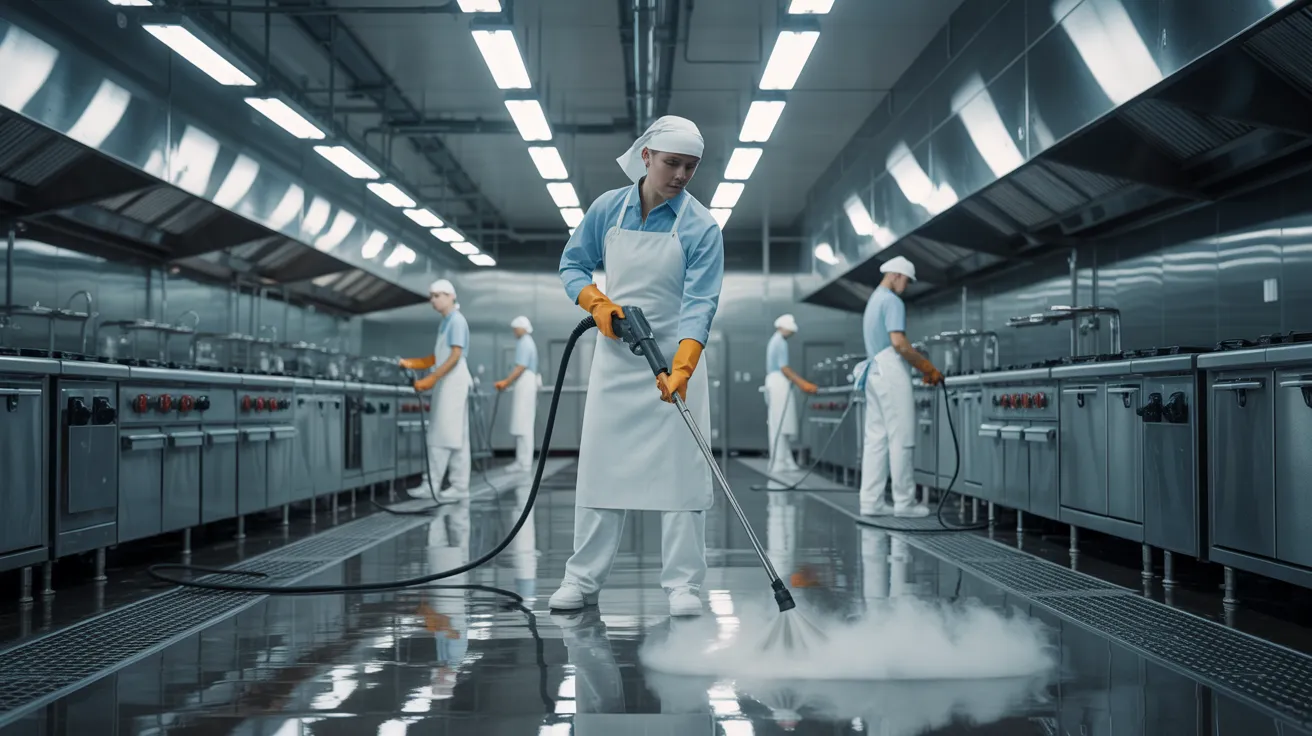
Brampton food safety and commercial cleaning experts help you keep restaurants, commissaries, bakeries, warehouses, and food service vehicles clean to code. They disinfect high-touch points, food preparation areas, equipment, floors, drains, restrooms, and prep zones using approved chemicals, proper concentration, and verified exposure periods. in maintaining dining venues, commissaries, bakeries, warehouses, and food service units in compliance. They disinfect high-touch points, food-contact surfaces, equipment, floors, drains, restrooms, and prep areas with approved chemicals, correct concentration, and documented exposure durations.
Key Takeaways
- Sanitation technicians in Brampton serve restaurants, grocery departments, commissaries, warehouses, bakeries, schools, mobile vendors, and allergen-sensitive operations.
- They treat high-touch surfaces, food-contact equipment, kitchens, floors, drains, restrooms, and storage areas using sectional methods to eliminate cross-contamination.
- Proper chemical concentration, suitability, and contact time are checked by qualified specialists, with conclusion logged via samples, inspections, and remedial documentation.
- Effective sanitation schedules account for danger, output capacity, format changes, releases, and guidelines when assigning everyday, recurring, and cyclical duties by zone.
- Opt for suppliers with HACCP, public-health, expertise, safety training, instruction, liability, credentials, coded tools, and inspection-ready maintenance records.
What Brampton Venues Require Food Safety Cleaning?
Food safety cleaning is necessary for any Brampton facility that processes, stores, prepares, packages, or serves food. Apply it to your establishment if it comes under health oversight, food standards, or HACCP systems. This includes dining establishments, break rooms, distribution centers, market departments, meat shops, fish areas, stores, and food prep kitchens.
You'll also need compliant food safety cleaning in warehouses, food manufacturing plants, cold storage sites, retail bakeries, school nutrition programs, banquet halls, and meal delivery hubs. Mobile and temporary operations apply too, examples being food trucks, festival vendors, and pop-up establishments. When your employees process ingredients, portion ready-to-eat items, reheat products, or store allergens, your establishment requires recorded sanitation procedures. In Brampton, hygiene remains necessary; it represents legal, operational, and consumer protection compliance.
Which Areas Do Brampton Cleaning Experts Cover?
Your facility requires professional cleaners who disinfect frequently contacted surfaces, kitchens, all floor types, and toilet facilities to maintain food safety compliance and public health standards. These zones receive attention because they represent the most significant contamination risk, trip and slip dangers, and breaches of sanitation codes.
Understanding their cleaning procedures allows you to confirm your operation's sanitation satisfies operational demands and regulatory compliance.
Sanitizing High-Touch Zones
Brampton sanitation experts emphasize high-touch surface cleaning because these touch areas can distribute bacteria, viruses, and food residue throughout a space. You should establish a formal plan for sanitizing frequently touched items like handles, plates, switches, railings, equipment controls, payment terminals, and fridge pulls. Implementing touchpoint mapping, experts identify every commonly touched surface and determine cleaning timing
Preventing secondary contamination by changing wipes, using directional processes, and separating supplies by location guarantees your cleaning plan remains measurable, auditable, and compliance-ready.
Cooking Zones, Walking Surfaces, and Restroom Environments
Brampton cleaning services zero in on kitchens, floors, and restrooms as each zone presents different food safety, accident, and wellness risks. In industrial kitchens, you need grease removal from cooking stations, appliance surfaces, drain systems, preparation areas, and backsplashes to minimize contamination and pest pressure.
Documented floor care is also provided as part of the service.
Restroom sanitation requires disinfecting touchpoints, fixtures, partitions, dispensers, and waste containers, restocking supplies and controlling odours. They also maintain restaurant cleaning supply rooms where product storage, sink cleanliness, and drain systems impact daily sanitation standards and worker protection.
Food Safety Cleaning Significance for Brampton Businesses
To comply with regulatory essential resource mandates and succeed in audits, Brampton facilities must follow food-safe cleaning standards. You also reduce cross-contamination by cleaning and sanitizing food-contact surfaces, equipment, and high-touch areas correctly. Most importantly, you safeguard community wellness by reducing the chance of food poisoning in your establishment.
Sanitary Standards Adherence
Because Brampton food establishments operate under rigorous sanitary regulations, food safety cleaning directly affects your ability to meet health code requirements, safeguard customers, and avoid enforcement action. You must maintain hygienic food handling zones, documented cleaning schedules, appropriate product handling, and traceable training practices that align with municipal and provincial inspection expectations.
Failure to maintain cleaning standards results in notices, remedial directives, reputational damage, and service interruption during follow-up inspections or compliance reviews.
Cross-Contamination Avoidance
Maintaining health code standards copyrights on your power to stop cross-contamination during everyday food preparation and sanitation. You need to partition uncooked items from finished dishes, sanitize prep surfaces between tasks, and position cleaning agents away from food surfaces. Explicit protocols lower contamination threats and reinforce steady regulatory adherence.
You could implement allergen segregation to stop main allergens from reaching shared surfaces, containers, or equipment. Use dedicated cutting boards, color-coded tools, and strict utensil labeling so staff don't mix items during preparation or service. Mandate handwashing after handling uncooked meat, fish, egg products, or allergens. Swap cleaning rags frequently, and check sanitizer strength with test strips. When employees learn these procedures each shift, you create a cleaner, safer operation that meets Brampton's food safety expectations every day.
Public Health Defense
Should food safety cleaning collapse, you don't simply encounter inspection problems—you increase the potential of contamination-related sickness harming customers, staff, and the wider Brampton community. You also weaken your role in safeguarding community wellness, especially in high-traffic food premises where pathogens travel quickly through surfaces, equipment, and touchpoints.
You require sanitation protocols that eliminate soils, disinfect correctly, and confirm effectiveness. This involves adhering to exposure times, employing authorized sanitizers, documenting procedures, and training employees to satisfy health-unit expectations. These controls promote disease prevention by limiting pathogens before contaminating food or surfaces. Across Brampton, strong cleaning protects at-risk populations, reduces disease potential, and shows your diligence. When you follow standards, you go beyond requirements—you meaningfully reduce risk and facilitate secure food handling throughout the area.
Why Is Cleaning Essential for Food Safety Compliance?
Maintaining rigorous cleaning routines ensures food safety compliance by decreasing contamination threats, limiting pathogen development, and keeping your facility in accordance with sanitation requirements under HACCP-based programs and public health regulations. You verify that food-contact surfaces remain visibly clean and microbiologically controlled, facilitating documented preventive controls and inspection readiness.
Effective cleaning also improves allergen mitigation by eliminating residues that can cause undeclared allergen exposure. by removing residues that can cause undeclared allergen exposure.
When Do You Schedule Commercial Cleaning?
spill incidents, and following-maintenance work
handled independently
Finding Quality Brampton Cleaning Experts: A Guide
Screen providers initially by their food-safe sanitation requirements—not budget alone. You need to confirm that every company meets CFIA, public health, and HACCP-aligned expectations for your operation. Demand insurance verification, WHMIS compliance, training records, and management systems. Evaluate technician understanding of cross-contamination risks, chemical safety, and documented sanitation practices.
You should also assess business dependability and responsibility. Request references from food facilities in Brampton, then examine turnaround periods, corrective actions, and communication standards. Confirm the company participates in supplier audits and can present inspection-ready documentation when regulators or third parties request evidence. Check whether equipment maintenance is performed, color-coded implements are used appropriately, and site-specific hazards are recognized. A competent service protects regulatory adherence, product integrity, and your brand reputation.
What's included in a sanitation cleaning strategy?
Create a documented strategy that clearly outlines every sanitation task, standard, and responsibility before production starts. You should document cleaning frequencies, approved chemicals, dilution rates, contact times, tools, and verification methods for each area, section, and machine. Don't forget to add pre-operational inspections, corrective actions, and employee training requirements.
Your framework should also cover cross-contamination prevention, waste disposal, pest management measures, and scheduled documentation for restrooms, drains, floors, and food-contact areas. Clarify how you'll distinguish raw from ready-to-eat operations, support ingredient tracking, and maintain accurate allergen labeling through validated cleaning between product changes. You should establish accountability, preserve signed records, and check results against regulatory standards, HACCP controls, and customer requirements. When gaps appear, adjust procedures immediately and retrain staff.
Commonly Requested Inquiries
Are cleaning services offered for nighttime operations in Brampton properties?
If you operate controlled facilities, you'll also require records that enable audits and maintain compliance.
Will sanitation professionals respond to emergency spills?
Yes, you can find many Brampton cleaning professionals offering emergency response services. They handle contamination, assess dangers, isolate zones, and execute rapid cleanup to minimize risk and prevent disruption. You should confirm timeframes, certifications, protocols, and disposal methods. If your facility must meet standards, pick a provider that documents incidents, follows procedures, and ensures verification.
Will plant-based disinfectants protect safely food-contact surfaces?
Absolutely, eco-friendly disinfectants remain appropriate for food-handling equipment when you pick items marked food-safe and regulatory compliant. You must check contact duration, dilution rates, and rinse protocols in advance of use. Plant based formulas minimize harsh chemical exposure, though you must obtain demonstration of efficacy against specific pathogens. For preserving residue-free areas, follow exact manufacturer guidelines and verify your disinfectant complies with relevant food safety standards.
Will cleaning schedules accommodate seasonal shifts?
Certainly, maintenance plans adapt to seasonal variations well. Adjust frequencies, labor allocation, disinfectants, and verification steps to align with production rhythms while preserving regulatory adherence. Lower production downtime through scheduling cleaning amid equipment transitions, maximum output, and operational patterns. Concurrently update procedural documents, employee training, and monitoring protocols to account seasonal hazards, emerging allergens, or elevated soil levels. Ongoing evaluations preserve the schedule functional.
Are commercial cleaners providing employee instruction on hygiene protocols?
Indeed, commercial cleaning providers often offer staff training on proper hygiene. Your team receives training on safe chemical application, contact times, cross-contamination prevention, equipment breakdown, and documentation. They typically follow instruction with HACCP, GMP, and CFIA or local public health criteria. Many perform sanitation audits to confirm standards, reveal issues, and strengthen improvement measures. This supports you in establish reliable processes, pass inspections, and reduce food safety risks on a daily basis.
Final Thoughts
Partnering with Brampton commercial cleaning and food safety experts means more than cleaning—it guarantees your operation stays inspection-compliant and your standards are defensible. From kitchen areas to production zones, each cleaned area and organized section lessens contamination risk and prevents major expenses. By scheduling maintenance at suitable frequencies and executing a comprehensive cleaning strategy, you protect staff, clients, and your reputation. In a heavily regulated sector, sanitary conditions are non-negotiable—they're vital to proper management.